Science is also about superheroes: eLTER at BIOGEOMON 2026
From 8-12 June 2026, the global research community turned its attention to Umeå, Sweden, where BIOGEOMON 2026 brought together more than 500 registered participants. This year’s edition was the biggest BIOGEOMON conference to date and marked the first time the event was hosted by the Swedish University of Agricultural Sciences (SLU).
BIOGEOMON has brought together researchers studying the biogeochemistry of soils and aquatic environments since 1987. The 2026 edition offered an intense and diverse programme, with hundreds of scientific presentations taking place in ten parallel lecture halls, alongside networking and career events at the student union building. One full day was devoted to excursions to SLU’s nearby experimental research facilities, while the final day featured workshops on topics ranging from post-glacial peatland formation to the role of bubbles in flowing water.
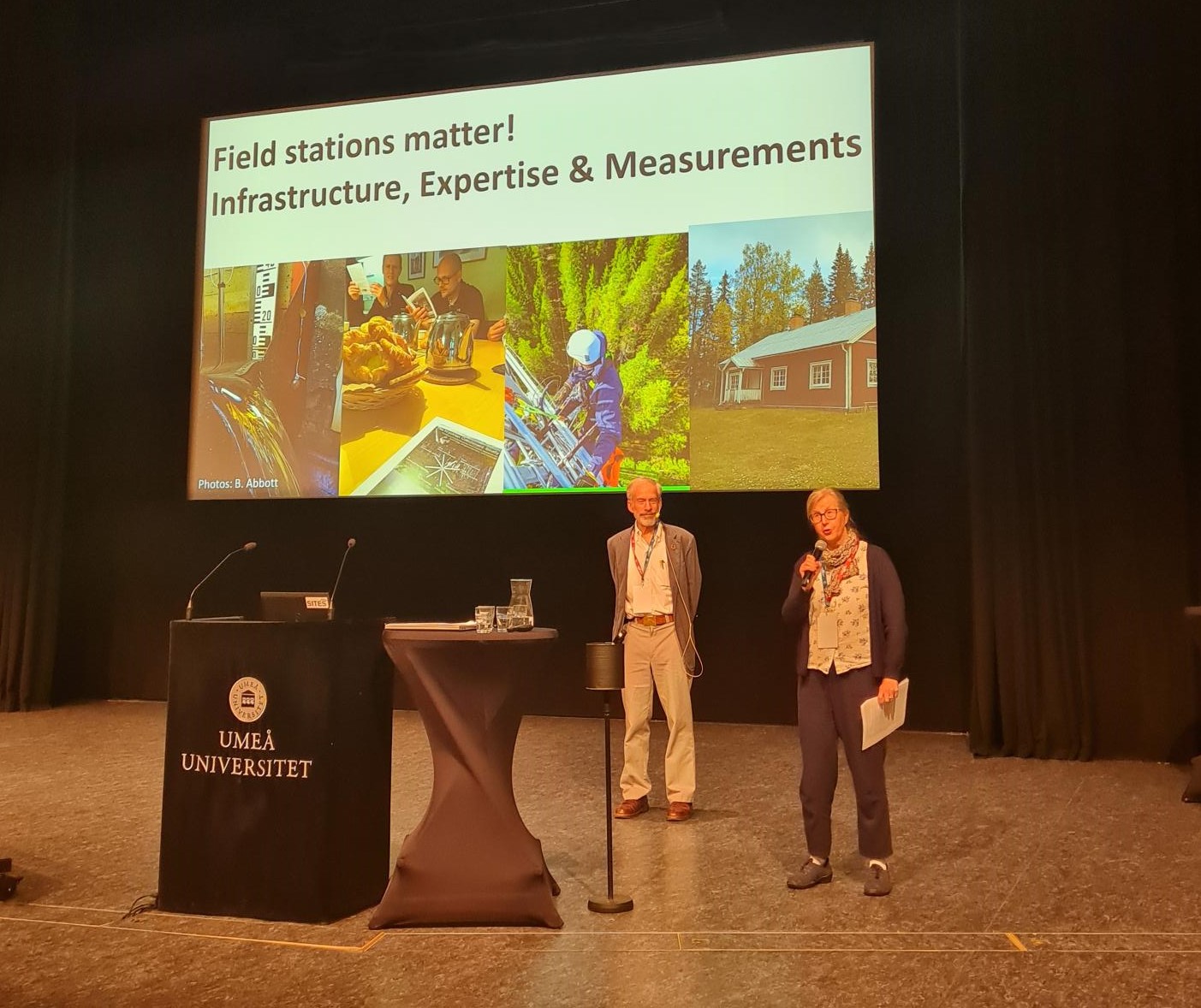 Kevin Bishop and Jaana Bäck (eLTER Co-coordinator) on stage at BIOGEOMON 2026
“The natural processes move seamlessly across different systems. That is why it is important to create a forum where researchers in different fields working in different ecosystems can meet. We hope this year’s conference can continue this tradition with a diverse and exciting program,” said Kevin Bishop, Professor at the Department of Aquatic Sciences and Assessment, SLU, one of the conference co-hosts.
eLTER in the scientific programme
eLTER was represented in the scientific programme through the session Field Research Infrastructures for Critical Zone and Aquatic Ecosystems in Transition, co-chaired by Jaana Bäck (eLTER Co-Coordinator), and Marcus Wallin.
A clear message continued to be highlighted throughout the session: field stations matter. The discussions underlined the need for long-term environmental observation and open data, but also the importance of providing users with opportunities to conduct their own research. Technical staff at field stations were recognised as playing an essential role and as needing opportunities to further develop their skills. Collaboration across research infrastructures at different scales, from national to European, and co-location between research infrastructures, such as ICOS and eLTER, were also presented as important strengths.
The session showed how field research infrastructures support science in a time of environmental transition. From long-term ecosystem observation and transdisciplinary research to restoration, climate adaptation, greenhouse gas emissions, open data and critical zone science, the eLTER-related presentations demonstrated how collaborative research infrastructures are helping the scientific community better understand and respond to a rapidly changing planet.
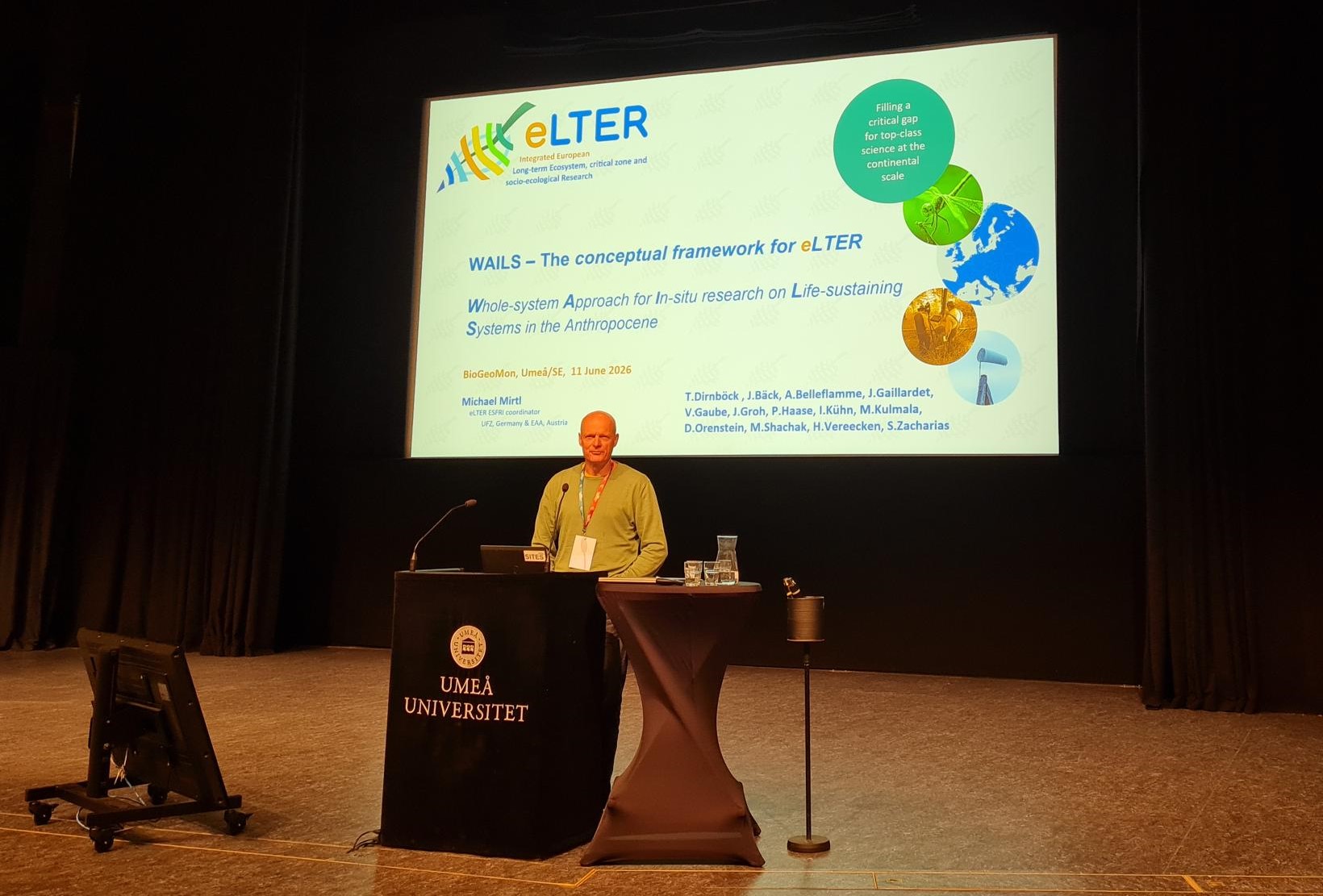 eLTER RI as collaborative framework enabling transdisciplinary research on multiple environmental stressors (presented on-site by Thomas Dirnböck)
eLTER-related presentations
The eLTER-related contributions included:
Kevin Bishop – The complementary power of extensive environmental monitoring and intensively instrumented observatories for understanding Earth systems in the Anthropocene
Michael Mirtl – eLTER RI as collaborative framework enabling transdisciplinary research on multiple environmental stressors (presented on-site by Thomas Dirnböck)
Blaize Denfeld – Swedish Infrastructure for Ecosystem Science (SITES): national hub for critical zone and aquatic science and open data
Thomas Dirnböck – Nitrogen fingerprints in European forest vegetation
Tejshree Tiwari – From Research Infrastructures to Living Labs: Linking Research, Society, and Climate Adaptation in Northern Landscapes
Jimmy Clifford Oppong – Use of FALCON experimental catchments to evaluate restoration of the critical zone in post-mining ecosystems
Martin Forsius – National-scale evaluation of greenhouse gas emissions from surface waters: new concepts in LULUCF emission inventories
Julien Tournebize – French National Network of Critical Zone Observatories OZCAR: from monitoring to sharing one common perception
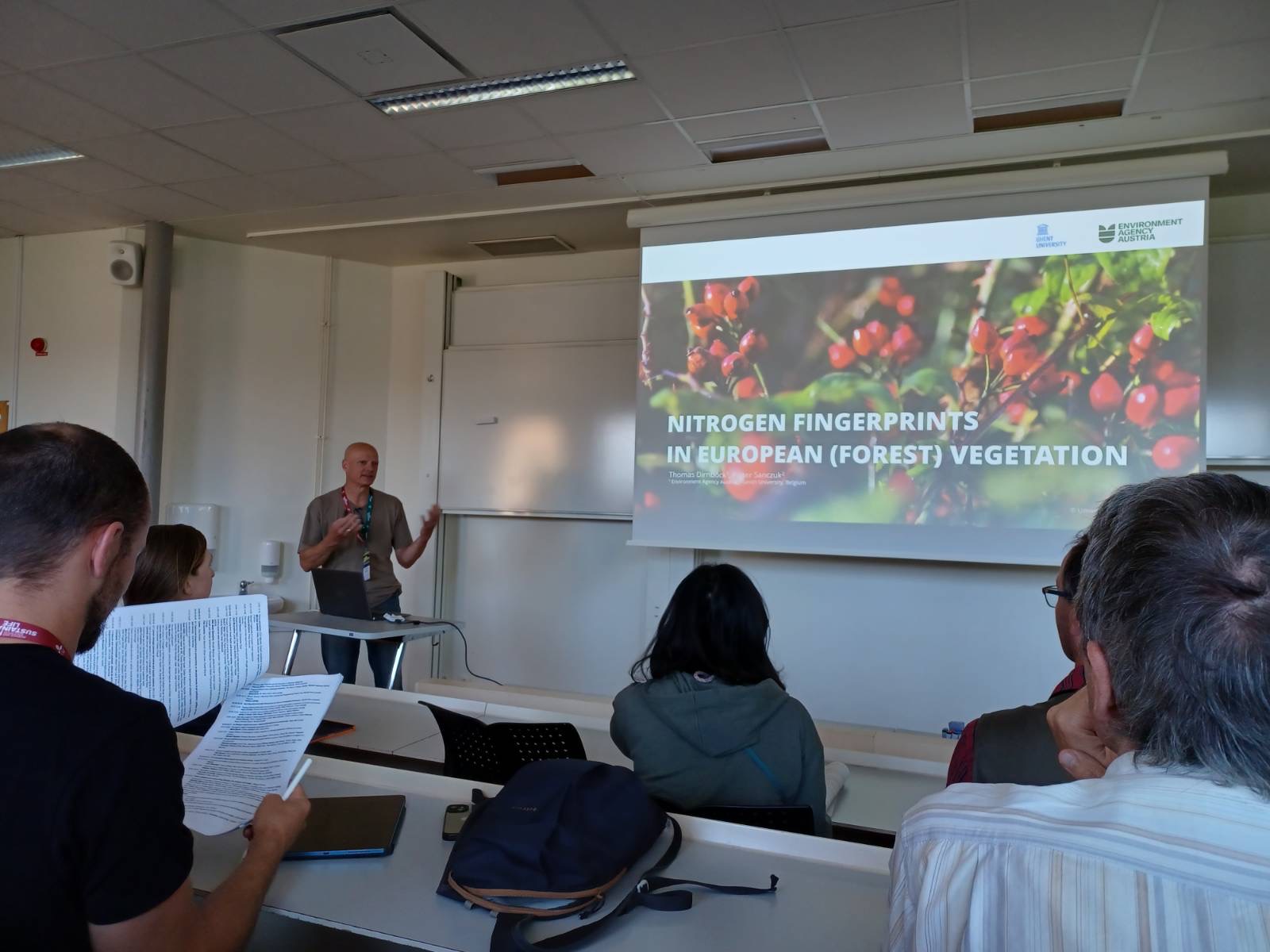 Thomas Dirnböck during his talk on Nitrogen fingerprints in European forest vegetation
Nitrogen fingerprints in European forest vegetation
In one of the eLTER-related presentations, Thomas Dirnböck focused on the effects of air pollution, in particular the deposition of pollutants containing nitrogen, such as ammonia from agriculture and nitrogen oxides from transport. This deposition results in eutrophication and has significantly influenced changes in vegetation across Europe over the last 50–60 years.
There has been a noticeable rise in generalist species that can cope with more eutrophic conditions caused by nitrogen deposition. In line with these findings, the research also identified a westward range shift of forest plants towards more eutrophic environments, such as those observed in Western Europe.
The plant species colonising these areas are known to speed up nutrient cycling in ecosystems, thereby tightening the nitrogen cycle. However, they are also more prone to stresses such as drought and frost, which are expected to increase with climatic change. This reshuffling of species therefore results in complex ecosystem changes that are not yet fully understood.
Connecting the eLTER community
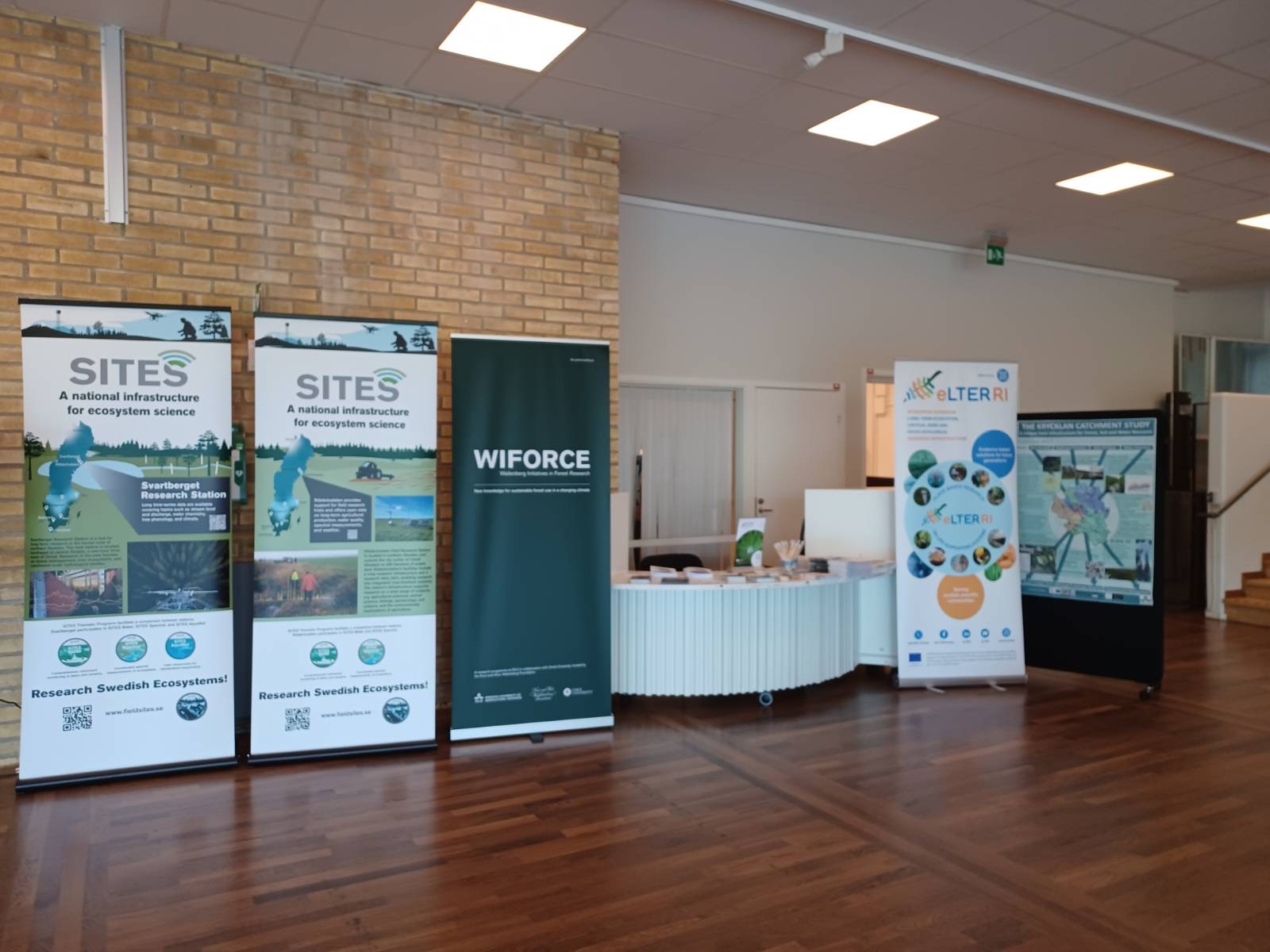
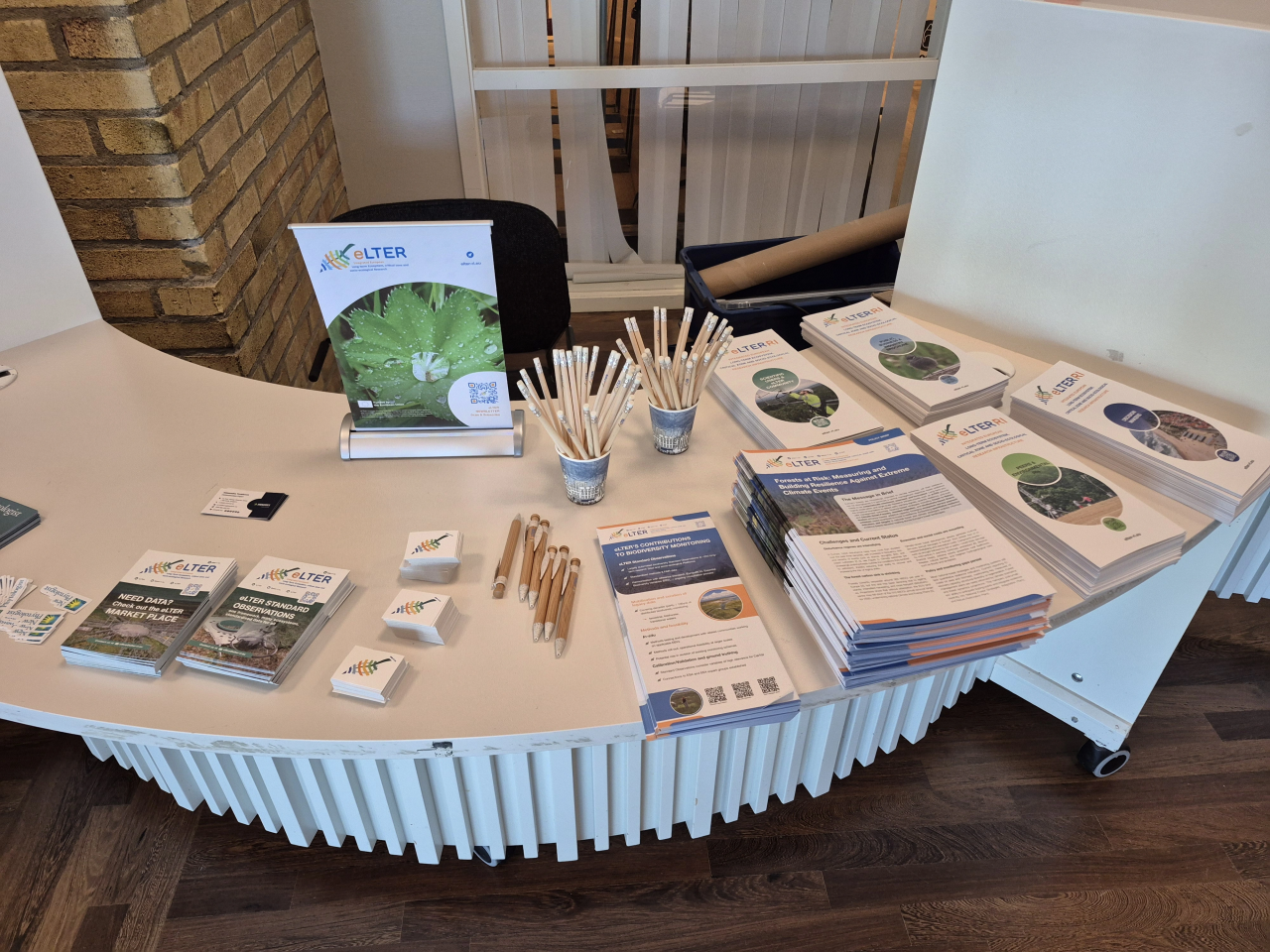
Beyond the scientific programme, eLTER was also present with a booth at the conference. Participants were invited to stop by, pick up dissemination materials and take them back to share with colleagues, peers, institutions and national networks.
 |  |
At BIOGEOMON 2026, the eLTER community contributed to discussions on some of the most pressing environmental challenges of our time, highlighting the value of long-term observations, shared knowledge and international cooperation for evidence-based environmental action.
Read also: SLU hosts record breaking environmental science conference - https://www.slu.se/en/news/2026/05/SLU-hosts-record-breaking-environmental-science-conference/
Thanks to everyone who contributed for eLTER's presentation at BIOGEOMON 2026! Special thanks to Blaize Denfeld, Tejshree Tiwari, Johannes Tiwari and Kevin Bishop for all their help! #eLTERcommunity