eLTER Transnational access (TA) Funded Research sheds light on Vulnerable Snowbed Soil Biodiversity
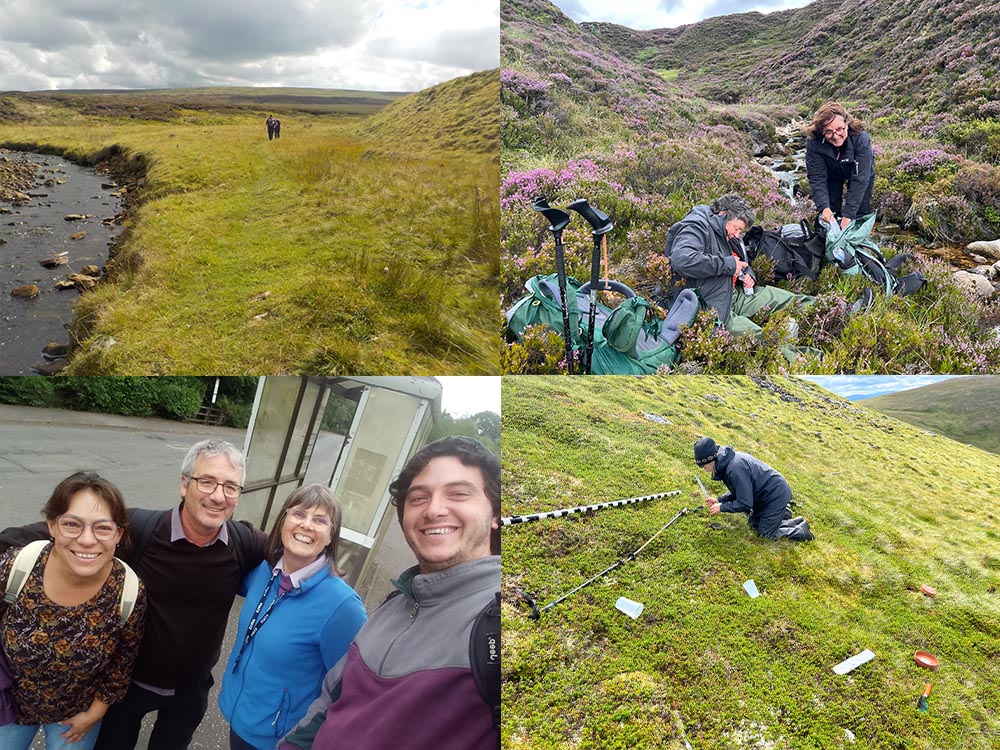
Transnational visitors from Israel’s Dead Sea and Arava Science Center (DSASC) to Cairngorms LTER, Scotland explored how climate‑driven loss of late‑lying snow threatens specialised soil arthropod communities. The study involving UK Centre for Ecology & Hydrology, conducted at the Cairngorms National Park, provides important insights into how climate change may affect soil biodiversity in mountain ecosystems. The research, recently published in the European Journal of Soil Biology, focuses on a UK site that is part of the eLTER research infrastructure.
Understanding disappearing snowbed ecosystems
Mountain snowbeds - areas where snow persists late into the year - create unique environmental conditions that support specialised plant and soil communities. However, climate change is rapidly reducing snow cover duration across Europe’s mountain regions, including Scotland. In recent years, the UK has even experienced complete seasonal snow loss, which is an unprecedented trend.
The study examines how these changes may impact soil arthropods - tiny invertebrates such as mites and springtails that play essential roles in nutrient cycling and ecosystem functioning.
Research at an eLTER site
The work was carried out at the Allt a’Mharcaidh catchment at Cairngorms, LTER. Researchers compared late-lying snowbed habitats with nearby alpine heath across multiple environmental and biological variables.
They combined vegetation surveys, soil measurements, and detailed analyses of soil arthropod communities to understand how these ecosystems differ and how they may respond to ongoing environmental change.
Key findings
The study reveals a complex picture:
- Distinct plant communities: Snowbeds supported unique vegetation dominated by moisture-loving grasses and sedges, clearly different from surrounding heathlands.
- Strong environmental contrasts: Snowbeds were wetter and experienced fewer freeze–thaw cycles due to insulating snow cover.
- Subtle but important faunal responses: While overall soil arthropod communities appeared similar between habitats, important differences emerged at the functional level.
- Trait-based differences matter: Soil organisms with specific adaptations (e.g. to moisture or soil depth) responded differently to habitat conditions, highlighting the importance of functional traits over simple species counts.
Implications for climate change and biodiversity monitoring
One of the most striking findings is that changes in ecosystem functioning may occur before obvious changes in species composition. As snowbeds shrink, the environmental filtering that shapes these specialised communities may weaken, potentially altering key ecosystem processes such as decomposition and nutrient cycling.
The study from Cairngorms LTER site highlights distinct snowbed vegetation and moisture regimes shaping arthropod traits, underscoring the need for long‑term, trait‑based monitoring.
Read the publication: https://www.sciencedirect.com/science/article/pii/S1164556326000270?via%3Dihub
Cite as: Christopher Andrews, Elli Groner, Sofia Galeano, Maor Tikochinsky, Jan Dick, Characterizing snow relict assemblages of soil arthropods at risk of disappearing due to climate change, European Journal of Soil Biology, Volume 129, 2026, 103829, ISSN 1164-5563, https://doi.org/10.1016/j.ejsobi.2026.103829.
Read how it all started: Cairngorms and Moor House UK LTER sites welcome international visitors
Subscribe to the eLTER newsletter for more updates!