eLTER receives its official Research Organization Registry (ROR) identifier
The eLTER Research Infrastructure has been assigned its official Research Organization Registry (ROR) identifier: https://ror.org/0445b1867. Use this identifier in publications, datasets, software metadata and ORCID affiliations to ensure consistent attribution of eLTER research outputs.
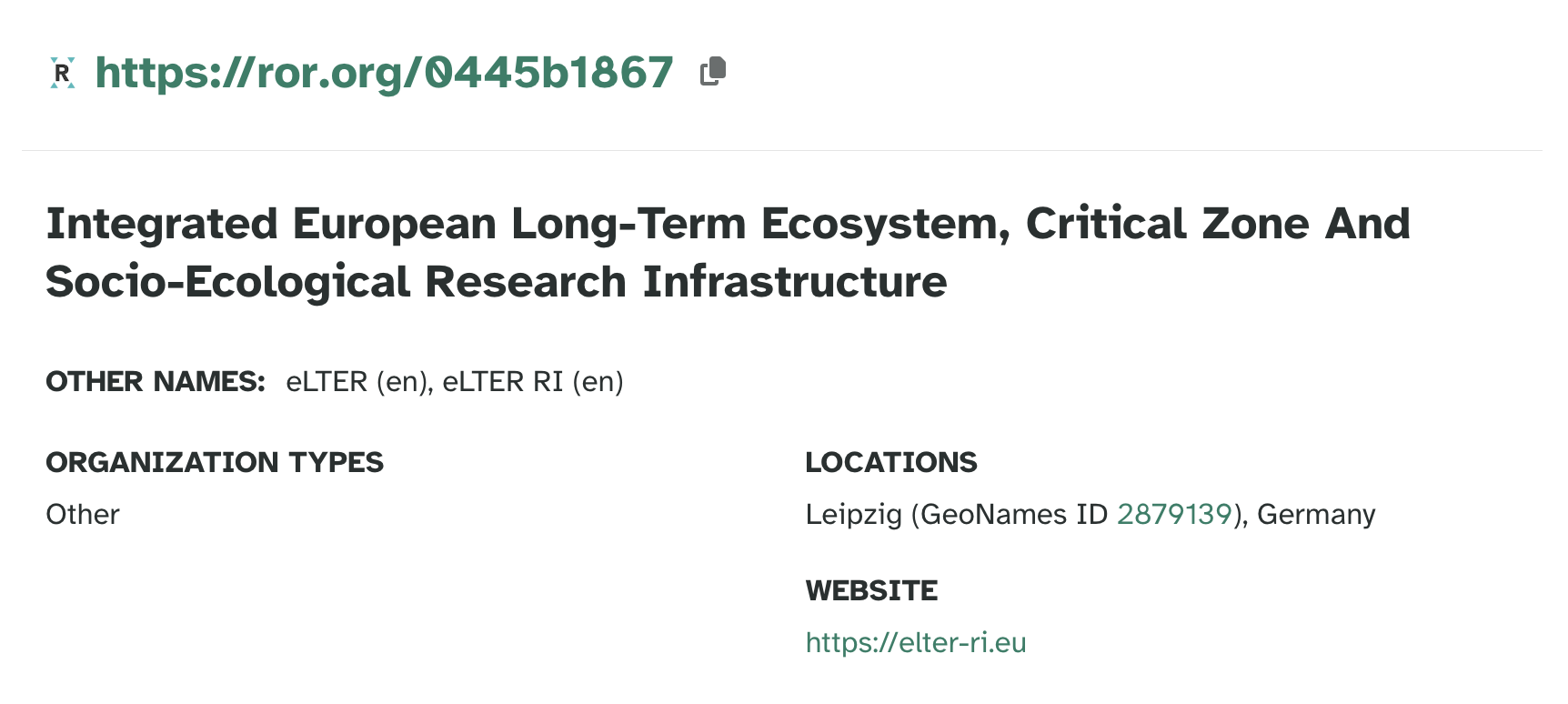
Persistent identifiers are a cornerstone of modern Open Science. DOIs identify research outputs, ORCID identifies researchers and ROR identifies organisations. The official ROR identifier is therefore an important milestone for the visibility and interoperability of eLTER within the global scholarly communication ecosystem and it strengthens the ability to aggregate scientific outputs and demonstrate the collective impact of the community. Consistent use of the ROR identifier will facilitate reporting, bibliometric analyses, Open Science workflows and future integration with international research information systems.
The eLTER ROR identifier is supported by major components of the global research infrastructure, including Crossref DOI metadata, DataCite DOI metadata and ORCID. This allows publications, datasets, software releases and researcher affiliations to be connected with eLTER through a persistent organisational identifier, improving discoverability, attribution and long-term visibility across scholarly information systems.
How can I use the eLTER ROR identifier?
Researchers, data managers and project coordinators can contribute to increasing the visibility of eLTER by including the official ROR identifier in relevant metadata.
Publications
When submitting manuscripts to journals, select eLTER Research Infrastructure as an affiliation where appropriate and use the official ROR identifier if the publisher's submission system supports organisational identifiers. Many publishers now transmit ROR information through Crossref metadata, making institutional affiliations machine-readable and interoperable.
Datasets and data products
When publishing datasets through repositories that register DOIs via DataCite, include the eLTER ROR identifier in the organisation or contributor metadata whenever possible. This enables datasets to be linked to eLTER alongside publications and other research outputs.
ORCID researcher profiles
Researchers affiliated with eLTER can add the organisation to their ORCID Employment, Membership or Affiliation records using the integrated ROR search available within ORCID. This strengthens the connection between researchers, their outputs and the Research Infrastructure.
Software and code repositories
When archiving software releases or workflows with a DOI, for example through GitHub-Zenodo integration, include the eLTER organisation and ROR identifier in the associated metadata if supported by the repository.
Project reporting and institutional repositories
Projects, repositories and national nodes are encouraged to include the official eLTER ROR identifier when describing organisational affiliations. Consistent adoption will improve aggregation of outputs, strengthen reporting capabilities and enhance the international visibility of the eLTER community.
Why does this matter?
By consistently using the eLTER ROR identifier, every publication, dataset and software release contributes to a more complete representation of the scientific contribution of the eLTER Research Infrastructure and its distributed community across Europe.